 How-to
Managing Condensation Issues in Older London Flats
Last Updated: October 31, 2026
Quick Summary
Managing condensation issues in older London flats means cutting moisture at source, warming cold surfaces and keeping air moving through the flat. Open windows for 10-15 minutes each morning, run extractor fans during and for 15 minutes after cooking or showering, and never dry laundry on radiators. Find the moisture source first, because ventilation alone will not solve a problem you have not diagnosed.
- Solid brick walls, single-glazed sash windows and sealed chimneys create the cold spots where condensation forms.
- Condensation comes from inside the flat; damp enters from outside the building fabric, and each needs a different fix.
- Keep extractor fans running for 15 minutes after use and wipe tiles and glass while the room is still steamy.
- Never block purposeful vents, air bricks or chimney flues, as sealing every draught can make mould worse.
- Indoor relative humidity above roughly 60% points to excess moisture, so log readings with a hygrometer before buying equipment.
Table of Contents
- Why Older London Flats Trap Moisture
- The Difference Between Condensation and Damp
- How to Stop Condensation in a Flat: A Room-by-Room Routine
- Ventilation in Older Properties: What Works Without Damaging the Building
- Heating, Insulation and the Cold Spots That Cause Trouble
- Condensation and Mould in Rented Properties: Who Does What
- Measuring the Problem Before You Spend Money
- Getting a Free Valuation Before Your Next Tenancy
- Frequently Asked Questions
Why Older London Flats Trap Moisture
Condensation issues in older London flats rarely come from one fault.
Solid brick walls, single-glazed sash windows and sealed-up chimneys all create cold spots. For landlords dealing with these issues across a portfolio, there is a guide to managing older London properties.
The RICS guidance on damp and mould makes a point most quick-fix guides skip: find the moisture source first. Ventilation alone will not solve a problem you have not diagnosed.
Below, we show you exactly how to trace the cause, fix it room by room, and know when to escalate.
The Difference Between Condensation and Damp
Condensation is water vapour from inside the flat turning back into liquid on cold surfaces. Damp is moisture entering from outside the building fabric. They look similar and need completely different fixes.
Getting this wrong wastes money. A dehumidifier will not stop rising damp, and re-pointing a wall will not stop steam from a shower settling on a window.
Signs That Point to Condensation
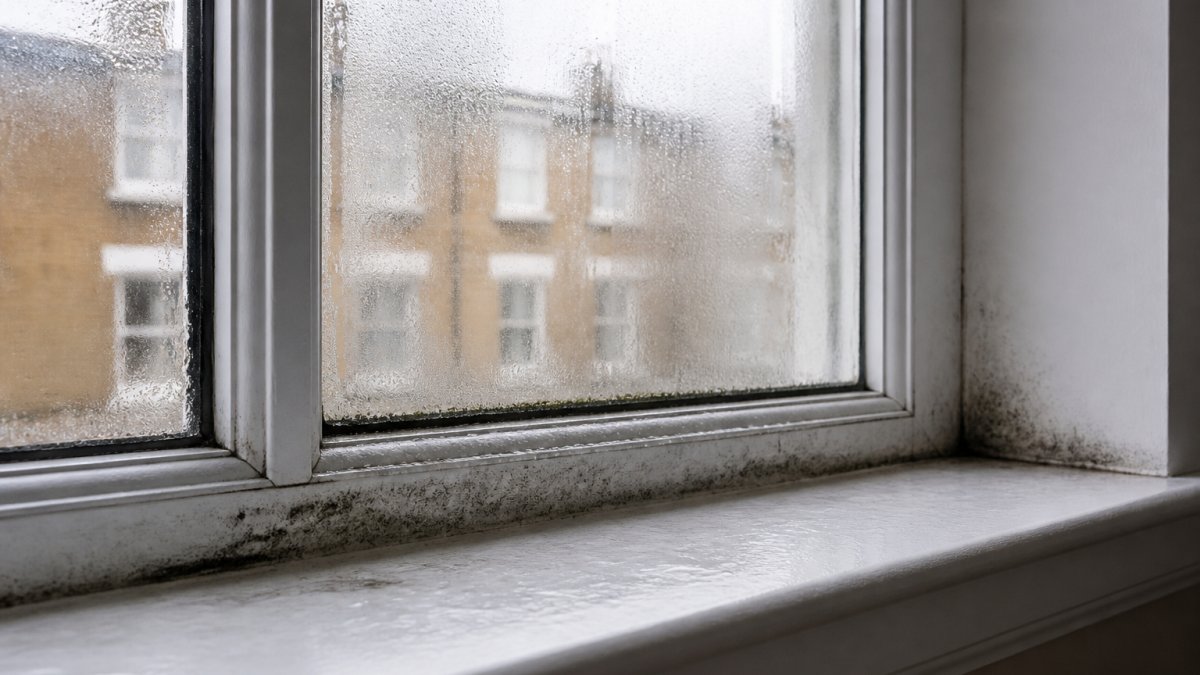
Look for water on glass, tiles and window frames, especially in the morning. Black mould clusters in corners, behind furniture and along ceiling edges where air cannot move.
Other clues:
- Musty smell that fades when windows are open
- Damp patches that grow in cold weather
- Mould returning within weeks of cleaning
Signs That Point to a Leak, Penetrating or Rising Damp
Leaks and penetrating damp leave tide marks and staining that spread outward. Rising damp shows a damp band low on the wall, often with crumbling plaster and a white salt deposit.
Watch for:
- Damp patches that stay wet in summer
- Staining on ceilings below another flat
- Damp only on one external wall
If you see these, stop treating it as condensation. Get the fabric checked first.
How to Stop Condensation in a Flat: A Room-by-Room Routine
Stopping condensation means cutting moisture at source, warming cold surfaces and moving air through the flat. A daily routine beats occasional deep cleans every time.
Work through this in order:
- Mornings: open windows for 10-15 minutes to flush out overnight moisture.
- Cooking: use pan lids, run the extractor, and open a window slightly.
- Showering: run the fan during and for 15 minutes after, then wipe surfaces.
- Laundry: dry outside or in a vented dryer, never on radiators.
- Evenings: wipe window glass and sills dry before closing up.
- Weekly: check corners, wardrobes and behind furniture for early mould.
Kitchen and Bathroom: The Two Rooms That Matter Most
These two rooms produce most of the water vapour in any flat. Boiling water and hot showers release litres of moisture into the air, and older flats often cannot clear it fast enough.
Practical moves that work:
- Keep the extractor fan running for 15 minutes after use
- Wipe down tiles and glass while the room is still steamy
- Keep the bathroom door closed during showers
A simple daily routine cuts moisture at source and keeps air moving through the flat.
| When | What to do |
|---|---|
| Mornings | Open windows for 10-15 minutes to flush overnight moisture |
| Cooking | Use pan lids, run the extractor, open a window slightly |
| Showering | Run the fan during and for 15 minutes after, then wipe surfaces |
| Laundry | Dry outside or in a vented dryer, never on radiators |
| Evenings | Wipe window glass and sills dry before closing up |
| Weekly | Check corners, wardrobes and behind furniture for early mould |
Ventilation in Older Properties: What Works Without Damaging the Building
Ventilation in older properties needs to move air without wrecking the fabric. The goal is steady background airflow, not blasting heat out of the window.
Start with the principle: older flats were often designed to breathe. Chimneys, sash windows and open fireplaces once provided constant low-level air movement. When those routes are sealed, a blocked chimney, draught-proofed sashes, a new kitchen, the moisture has nowhere to go.
The main options, and what each actually does
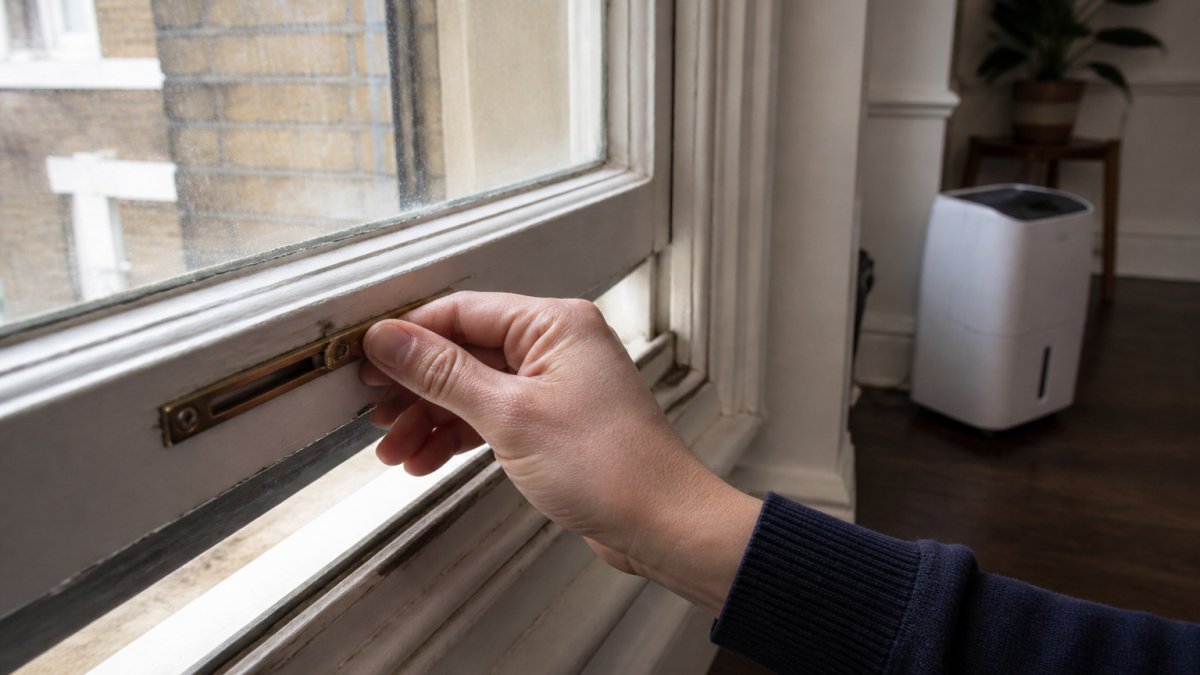
- Trickle vents on windows. Constant low-level air movement through a small slot. They cost little to fit and do not damage original joinery when installed properly. Best for bedrooms and living rooms where you want background ventilation without opening windows wide.
- Extractor fans in kitchens and bathrooms. The workhorses for moisture-heavy rooms. A fan that runs during and for 15 minutes after use removes the bulk of cooking and shower steam. Check the fan actually extracts to outside, a fan ducted into a loft or a dead fan is worse than none because it gives false confidence.
- Positive input ventilation (PIV). A unit in the loft or ceiling that pushes filtered air into the flat, gently pressurising it and pushing damp air out through existing gaps. Useful where fitting ducting is impractical, but it needs a loft or ceiling void and works best alongside other measures.
The breathability trap
Solid-wall and heritage buildings need to manage moisture differently from modern sealed construction. Breathable materials, lime plaster, lime mortar, breathable paints, allow moisture to pass through the fabric rather than trapping it. If you retrofit modern impermeable materials (cement render, vinyl wallpaper, sealed paints) onto a solid wall, you can trap moisture inside the wall, where it shows up as damp patches and blown plaster rather than surface condensation.
Heritage and listed buildings
For heritage or listed buildings, check before fitting anything permanent. Reversible options like window vents and portable dehumidifiers carry far less risk than new ducting or structural alterations. Secondary glazing is often a better route than replacing original sash windows, because it improves the thermal performance of the window without removing historic fabric, and it can be specified with ventilation slots to keep airflow.
A practical sequence for most older flats:
- Clear and maintain existing vents and air bricks.
- Fix or replace dead extractor fans in kitchen and bathroom.
- Add trickle vents to windows where the joinery allows.
- Consider secondary glazing on the coldest single-glazed windows.
- Only then consider whole-flat mechanical ventilation, and take specialist advice first.
Heating, Insulation and the Cold Spots That Cause Trouble
Cold spots are where condensation shows up first. Warm air holds more moisture, so keeping a steady temperature reduces how much settles on surfaces. But in older flats the cold spots are structural, not just a matter of turning the heating up, and the wrong insulation can make the problem worse.
Why older flats have so many cold spots
Solid brick walls have no cavity, so they conduct heat outward and stay cold on the inside face. Single-glazed sash windows lose heat fast, and the glass and frame run colder than the room air.
Heat the whole flat evenly rather than one room hard. Background heating at a consistent level works better than short blasts, because it keeps surface temperatures up and reduces the temperature swings that drive condensation.
Target the known cold spots
- Single-glazed windows and frames, the coldest surfaces in most older flats.
- Solid external walls, especially north-facing and shaded walls that never warm up.
- Behind wardrobes and furniture pushed against walls, where air cannot circulate.
Simple fixes include leaving gaps behind furniture, using thermal curtains (drawn at dusk, opened by day), and adding secondary glazing where budgets allow. Draught-proofing helps, but never block purposeful vents.
Insulation: where it helps and where it backfires
Insulation raises surface temperatures, which is exactly what you want, but in older buildings the material matters as much as the thickness.
- Solid walls. External or internal insulation can transform a cold wall, but internal insulation must be designed carefully to avoid trapping moisture against the original wall. Breathable insulation and a vapour-open build-up are usually the safer route. Get specialist advice before insulating a solid wall internally.
- Lofts and roofs. Loft insulation is usually low-risk and effective, provided ventilation at the eaves is maintained. Blocking eaves ventilation to fit insulation can create condensation in the roof space.
- Floors. Insulating under a suspended timber floor helps, but only if the sub-floor ventilation is kept clear. Sealing air bricks under the floor to stop draughts can trap moisture in the void.
The heating-cost trade-off
There is a real tension here: heating more reduces condensation but costs more, and in a poorly insulated older flat much of that heat goes straight outside. The practical answer is to prioritise.
A common pattern in older flats is a tenant who cannot afford to heat every room, so one bedroom stays cold and grows mould on the external wall.
Condensation and Mould in Rented Properties: Who Does What
Condensation and mould in rented properties sits with both sides. The tenant manages day-to-day moisture; the landlord fixes the building faults that make it worse.
The government guidance for landlords on damp and mould is clear: landlords should investigate the source of reported damp, not just tell tenants to open windows.
Tenant responsibilities:
- Ventilate and heat the flat reasonably
- Report mould early
- Wipe down surfaces and dry laundry sensibly
Landlord responsibilities:
- Repair leaks, failed extractor fans and broken heating
- Address structural cold spots where possible
- Respond to reports properly and promptly
A common mistake is blaming tenants for mould caused by a cold wall or a dead fan. That argument rarely holds up.
Measuring the Problem Before You Spend Money
Measure before you buy equipment. A cheap hygrometer tells you whether indoor humidity is genuinely high or whether the problem is cold surfaces.
Relative humidity above roughly 60% indoors points to excess moisture. A surface thermometer shows which walls run coldest. Where the two meet, that is where mould grows.
Run this check:
- Buy a hygrometer and log readings for a week
- Note which rooms stay dampest
- Check surface temperature on external walls
This log turns guesswork into evidence.
Getting a Free Valuation Before Your Next Tenancy
If you own an older flat and want the maintenance handled without chasing contractors, UKHG Ltd can help. We offer guaranteed monthly rent regardless of occupancy, no letting commission or management fees, flexible lease terms from 1 to 5 years, and 24/7 maintenance support with a dedicated point of contact.
Get a free valuation before your next tenancy and see what your property could deliver. You can get in touch to arrange your free property valuation.
Frequently Asked Questions
Why do older flats get condensation so much more than new builds?
Older flats often have solid walls, single glazing and less continuous insulation, so internal surfaces stay cold. Warm, moist air from cooking, showering and drying clothes hits those cold surfaces and condenses. Many period conversions also lack mechanical ventilation, and shared or sealed-up chimneys remove the airflow the building was designed around. Identifying the moisture source first is more effective than assuming ventilation alone will fix it.
How can I tell condensation from penetrating or rising damp?
Condensation usually appears on cold surfaces such as window glass, external wall corners and ceilings, and clears when ventilation and heating improve. Penetrating damp shows as patches on external walls after rain, often higher up. Rising damp affects the lower metre of ground-floor walls and leaves a tide mark. If damp persists after you have cut moisture and improved airflow, get a professional investigation rather than treating it as condensation.
Who is responsible for condensation and mould in a rented flat?
Landlords are generally expected to keep the property free of hazards, including damp and mould, and to investigate the source of reported damp. Tenants are expected to use ventilation, heating and extractor fans sensibly and report problems promptly. In practice, the fix is shared: the landlord addresses building defects and ventilation, while the tenant manages day-to-day moisture from cooking, bathing and laundry.
Can extra insulation make condensation worse in an older property?
It can if it is installed without thought. Insulating one wall or ceiling can push the dew point onto a colder, uninsulated surface nearby, and sealing gaps without adding ventilation traps moisture indoors. In older and heritage buildings, breathable materials and retained airflow matter. Deal with the moisture source and ventilation first, then insulate, and take advice before altering solid walls or original features.
Older flats will always need active moisture management. The difference is whether you are reacting to mould every winter or running a routine that keeps it away. If you would rather hand that work to someone else, UKHG Ltd can take it on. Get started with UKHG Ltd and get a free valuation for your property.