 How-to
How to Manage Disputes Over Shared Property Access
Quick Summary
Managing shared access disputes starts with confirming what rights you hold. Check the official title register and title plan for any express grant, easement, or agreement. Then raise the problem calmly, in writing, before escalating to mediation or legal advice.
- Obtain official copies of the title register and title plan for every property involved.
- Look in the charges register for rights that burden the land, including access routes granted to others.
- Document any obstruction with dated photographs and a diary of incidents.
- Send a polite written letter that identifies the arrangement and asks for removal within a set deadline.
- Never physically remove a fence, gate, or vehicle yourself, as this can expose you to legal claims.
Table of Contents
- Understanding Your Shared Access Rights and Where They Come From
- Identifying Common Causes of Shared Access Disputes
- Dealing With Neighbour Blocking Shared Access
- Building Evidence for a Right of Way Dispute
- Who Is Responsible for Maintaining a Shared Accessway
- Writing a Shared Property Dispute Letter and Escalating Step by Step
- Booking Your Next Step: When to Speak to a Property Solicitor
- Frequently Asked Questions
Understanding Your Shared Access Rights and Where They Come From
Last Updated: November 25, 2026
Shared access disputes are among the most stressful problems a property owner can face. A neighbour blocks the route, a delivery van cannot reach the back door, or a fence goes up across a path you have used for years.
A shared access right usually comes from one of three places: an express grant written into the title deeds, an easement created by long use, or an agreement between neighbours. Each one carries different weight. Knowing which applies to your property tells you where to start.
Checking title deeds and Land Registry documents
Your strongest evidence sits in the Land Registry. These carry a fee and can be ordered online from HM Land Registry (HM Land Registry portal: how to request official copies).
Look for these details:
- The property register: describes the land and any rights benefiting it.
- The charges register: lists rights that burden the land, including access routes granted to others.
- The title plan: shows the boundaries, though it is drawn to a general scale and may not be exact.
Watch out: a right can exist even when it is not mentioned on the register, particularly if it arose through long use. The register is the best starting point, not the final word.
Reading title plans and easement wording
Easement wording can be dense. Look for phrases such as "together with the right of way" or "subject to the right of access" in the deeds. Note who benefits and who is burdened, and whether the right covers vehicles, pedestrians, or both.
If the wording is unclear, a property solicitor can interpret it for you. Do not rely on a neighbour's reading of the deeds.
Identifying Common Causes of Shared Access Disputes
Most disputes come from a small set of causes, but the type of access arrangement shapes which cause is most likely. Recognising both the cause and the arrangement helps you respond proportionately rather than treating every blockage as a boundary war.
Match the dispute to the access arrangement
- Shared driveways: typically owned jointly or subject to reciprocal rights. Disputes usually centre on parking allocation, gate placement, and who pays for resurfacing. Because the surface is shared, one owner's decision to block a section for building work can strand the other.
- Rear passages and alleyways: often narrow, sometimes unregistered, and used for bins, bikes, and rear access. Disputes frequently arise over storage, fly-tipping, and locked gates that cut off a neighbour's only rear exit.
- Private roads and shared forecourts: common on estate-style developments. Maintenance cost allocation and speeding or parking by visitors are the usual flashpoints, and the deeds often contain a maintenance covenant that one party has stopped paying.
- Parking areas and allocated spaces: the right may be to park generally rather than in a specific bay. Arguments start when a neighbour treats a bay as exclusively theirs or when a visitor occupies a space needed for access.
- Public rights of way over private land: these are recorded on the definitive map held by the local highway authority. Disputes tend to involve obstruction, gates, or surface condition, and the highway authority has separate enforcement powers.
The underlying triggers
- Unclear boundaries: the route runs across land that one side believes is theirs alone. Title plans are indicative, not definitive, so a plan-based argument rarely settles the point (HM Land Registry: Boundaries and boundary disputes).
- Vague deed wording: the right exists but nobody agrees on its scope, such as whether it covers vehicles, trailers, or deliveries.
- Parking and obstruction: bins, cars, skips, or building materials block the way. Short, repeated obstructions are often harder to evidence than a single long one.
- Maintenance disagreements: one party refuses to contribute to upkeep, or disputes the standard of repair the other has chosen.
- Changes to the land: new fences, gates, planting, or hardstanding cut into the route or narrow it below practical use.
- Death, sale, or inheritance: new owners may not know the arrangement, and a buyer's solicitor may not have flagged an unregistered right.
A common mistake is assuming the other side knows the rules. Often they do not, and a polite written reminder that identifies the arrangement and the specific problem solves more disputes than a legal citation. If the arrangement is genuinely unclear, treat that as the first issue to resolve before arguing about the blockage itself.
Dealing With Neighbour Blocking Shared Access
When a neighbour blocks access, act quickly but calmly. Early action is easier than a formal fight later.
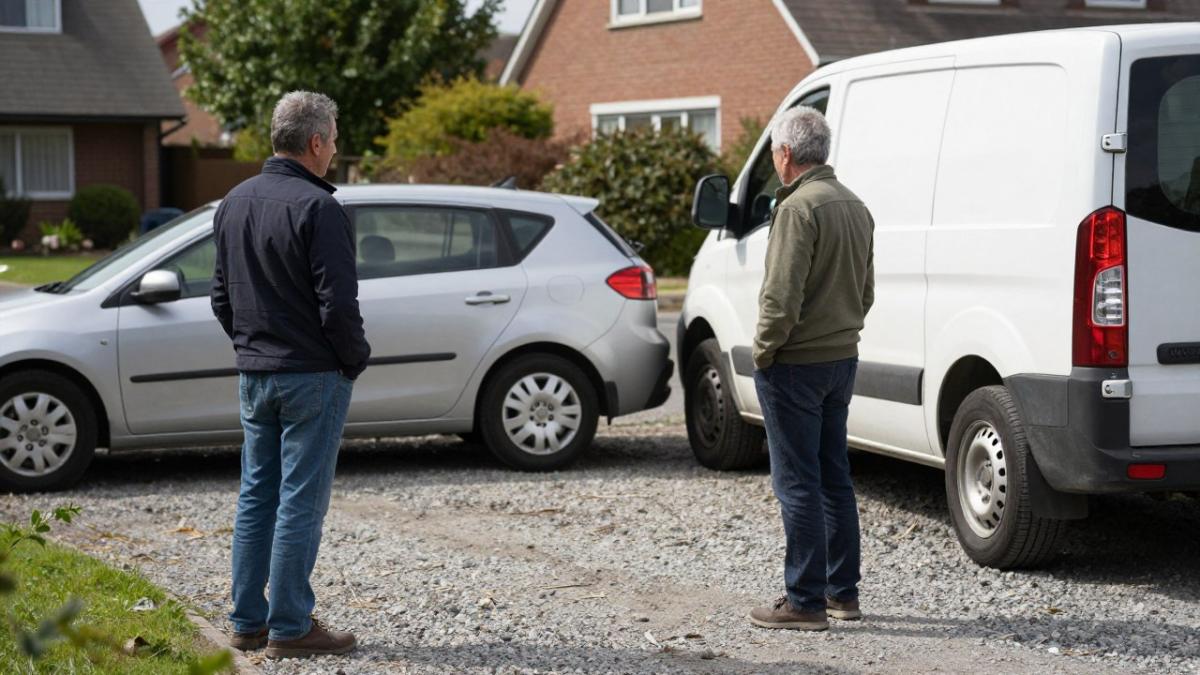
- Document the obstruction. Take dated photographs and note the time and duration.
- Speak to the neighbour directly. Many blockages are accidental, such as a parked car left out of habit.
- Confirm your right in writing. Attach the relevant title plan or deed extract.
- Ask for a specific fix. Request removal of the obstruction within a set time, such as 14 days.
- Escalate only if needed. Move to the next stage if the blockage continues.
Watch out: never physically remove a fence, gate, or vehicle yourself. Doing so can expose you to legal claims even if you are right.
Building Evidence for a Right of Way Dispute
Strong evidence wins more disputes than strong arguments. Start collecting it as soon as a problem appears.
Keep a simple evidence file containing:
- Official copies of the title register and title plan
- Any deeds, conveyances, or past agreements
- Dated photographs or video of the obstruction
- A diary of incidents, with dates, times, and witnesses
- Copies of all letters, emails, and messages sent
- Evidence of long-term use, such as old photos or statements from previous occupiers
Preserve everything. Do not delete messages, even unhelpful ones, because they may matter later.
Who Is Responsible for Maintaining a Shared Accessway
Responsibility for upkeep depends on the deeds and any agreement between owners, but the practical answer usually falls into one of three patterns. Identifying which applies to your route tells you whether you can recover costs and how to frame a request.
The three common patterns
- Express maintenance covenant: the deeds state who repairs what and how costs are shared, often in proportions or by reference to use. This is the strongest position because the obligation is written down and can be enforced.
- Implied or reciprocal obligation: where the deeds are silent but the route benefits two or more properties, the law generally expects users to share the cost of keeping it in reasonable repair. The split is rarely spelled out, so disputes tend to be about proportion rather than principle.
- No enforceable obligation: some routes are maintained informally, or one party has historically taken on the work. In that situation, a neighbour may have no legal duty to contribute, even if their use contributes to wear.
Turning responsibility into a workable arrangement
A practical approach is to agree a split in writing before work starts, not after the invoice arrives.
Record the agreement in a short note signed by both parties, setting out the scope of work, the contractor, the total cost, each party's share, and the payment date.
Watch out: paying for work without a written agreement can make it harder to recover a contribution later, because the other party may argue the work was unnecessary or gold-plated.
When a neighbour refuses to contribute
If a neighbour will not pay, the proportionate response depends on the amount and the urgency. For small sums, a written request that encloses the quotes and the deed extract often resolves it. For larger sums, a solicitor's letter setting out the covenant and a deadline is usually the next step.
If you manage a rental property, your repair duties may also apply. Our guide on Landlord Repair Duties in London: Your Obligations Explained sets out what landlords must usually handle. For major structural works, Who Pays for Major Property Repairs explains how liability is commonly allocated. If you need the route repaired or maintained, Property Maintenance & Repairs describes the reactive and planned work UKHG Ltd carries out. Repair costs themselves can be recovered in some cases, which Can You Claim Repair Costs From Your Landlord? covers.
The table below summarises the three common patterns of responsibility for maintaining a shared accessway.
| Pattern | Basis | Key point |
|---|---|---|
| Express maintenance covenant | Written in the deeds | Strongest position; obligation can be enforced |
| Implied or reciprocal obligation | Route benefits two or more properties | Dispute is usually about proportion, not principle |
| No enforceable obligation | Informal or historic upkeep | Neighbour may have no legal duty to contribute |
Writing a Shared Property Dispute Letter and Escalating Step by Step
A clear letter often settles a dispute without further action. Keep it factual, polite, and specific.
Template: Dear [Neighbour's name], I am writing about the shared access route between [Property A] and [Property B]. My title deeds, reference [title number], confirm my right of way over this route.
If the letter fails, escalate in stages:
- Send the letter and allow the deadline to pass.
- Seek mediation or a neutral third party to help negotiate.
- Take legal advice from a property solicitor about a formal demand.
- Consider a court application only as a last resort, since costs and timescales can be significant.
Each stage has a decision point. If the neighbour responds and agrees to a fix, record it in writing and move on.
Booking Your Next Step: When to Speak to a Property Solicitor
If the dispute is not resolving, or the deeds are unclear, speak to a property solicitor. They can interpret easement wording, assess your evidence, and tell you realistically what a court might decide.
This article gives general information only and does not replace legal advice. Consult a local property solicitor before taking action on a specific dispute.
UKHG Ltd can also help where the shared route affects a rental or managed property. Get in touch with UKHG Ltd for advice on your next step, or get in touch with UKHG Ltd to discuss your situation.
Frequently Asked Questions
What can I do if a neighbour blocks a shared access route?
Start by checking your title deeds and Land Registry documents to confirm your right of access. Then write to the neighbour, describe the obstruction, and ask them to remove it by a set date, keeping copies. If that fails, take advice from a property solicitor, who can assess whether a letter before action or an application to court is proportionate. Costs and timescales vary, so ask for a fixed-fee or estimate before instructing anyone.
How can I check whether a property has a legal right of access?
Obtain official copies of the title register and title plan from HM Land Registry, which can be ordered online for a fee. Look at the property register and the section listing rights and easements, such as a right of way over a named strip. Where the right is not registered, it may still exist through the original deeds or long use, so a property solicitor can review older documents to confirm your position.
What evidence should I collect in a shared access dispute?
Keep dated photographs and video of the obstruction, copies of all correspondence, your title documents and any plans, and a simple diary of each incident with times and witnesses. Record how the access is used day to day and any costs you have incurred. Store originals safely and avoid altering them, as organised evidence makes it far easier for a solicitor to advise you or for a court to assess your claim.
Who is responsible for maintaining a shared accessway?
Responsibility depends on the title deeds, any written agreement, and the terms of the easement. Some deeds share repair costs equally between the users, while others allocate them by use or by ownership of the strip. Where the documents are silent, the parties may need to agree a fair split in writing. Check this before carrying out repairs, so you do not end up paying for work you cannot recover.