 How-to
How Do You Prepare a House for First-Time Tenants?
Last Updated: November 8, 2026
Quick Summary
To prepare a house for first-time tenants, first confirm it is legally rentable by checking your mortgage, lease and insurance permissions. Then complete gas, electrical and alarm safety checks, repair and deep clean the property, and record its condition in a dated inventory before handing over the keys.
- Get written mortgage consent and check your lease and landlord insurance before letting.
- Arrange an annual gas safety check and give tenants the certificate before move-in.
- Fit and test smoke alarms on every storey where there is living space.
- Walk every room with a notepad and photograph existing damage for the inventory.
- Sign the inventory first, then hand over keys so condition is provable.
Table of Contents
- Deciding Whether the Property Is Ready to Let
- Landlord Safety Checks Before Renting
- Room-by-Room Inspection and Repairs
- Cleaning, Decorating and Presenting the Home
- Rental Property Inventory Checklist and Photo Evidence
- Documents to Give Tenants Before Move-In
- Timeline: How Long to Prepare a House for Rent
- Booking Your Move-In Date and Handover
- Frequently Asked Questions
Deciding Whether the Property Is Ready to Let
Knowing how to prepare a house for first-time tenants starts before you touch a paintbrush. The first decision is whether the property is ready to let at all. The checks below are the ones landlords most often skip.
Start by asking a simple question: can you legally rent this home out today? If the property needs fixing before anyone moves in, find reactive and planned repair specialists for London rentals can carry out the work for you. Many landlords assume they can, then find out a mortgage or lease says otherwise.
- Confirm the property is residential and fit for habitation
- Check the energy performance certificate (EPC) rating before listing
- Budget for repairs, safety work and cleaning before the first viewing
- Decide whether you will manage the letting yourself or use a managing agent, or compare a Guaranteed Rent Scheme that offers fixed monthly income, no voids and full property management.
Checking mortgage, leasehold and insurance permissions
Before you let, look at three documents: your mortgage offer, your lease (if you own a flat) and your buildings and contents insurance. Each one can block a letting or change the terms.
- Mortgage: Most lenders need written consent before you rent out a home. Ask your lender for permission in writing.
- Leasehold: Check the lease for sub-letting rules. Some leases ban letting outright or need the freeholder's approval.
- Insurance: Standard home insurance often excludes letting. A landlord policy covers damage caused by tenants and loss of rent.
Watch out: letting without permission can void your insurance and breach your mortgage. Get the paperwork sorted first.
Landlord Safety Checks Before Renting
Safety checks are not optional. Landlords must meet specific standards before a tenant moves in, and every check should be recorded so you can prove compliance later.
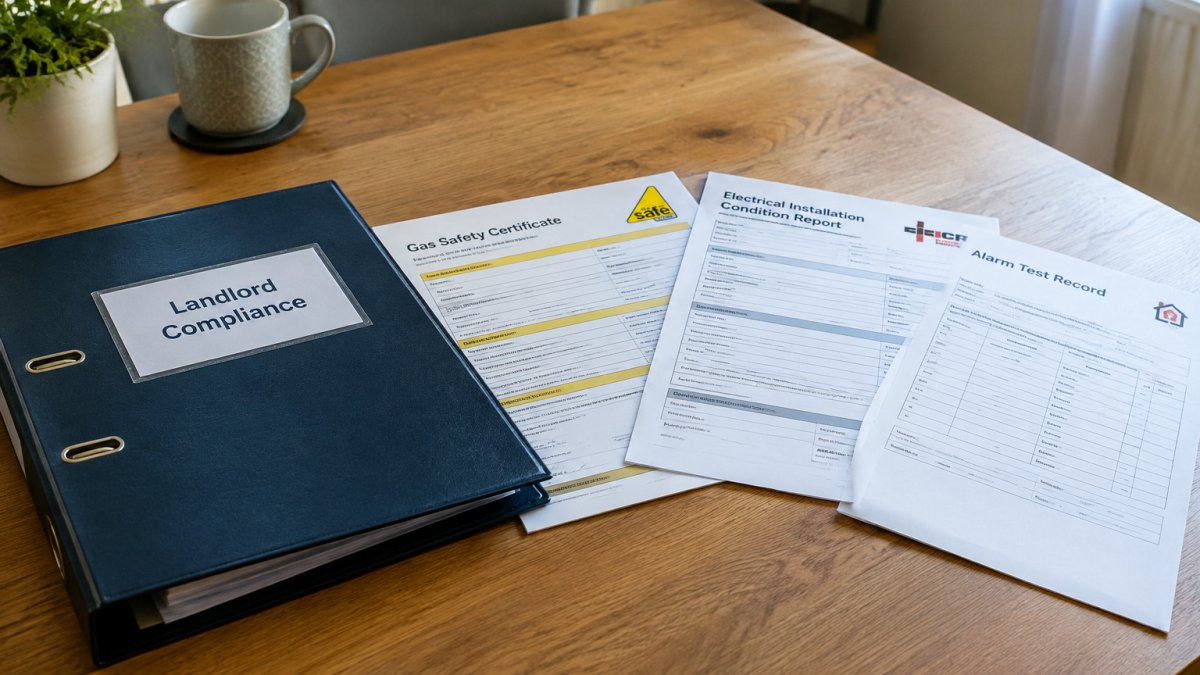
Gas, electrical and fire safety come first. Each one has its own certificate, its own renewal cycle and its own rules about who may carry out the work, so keep copies of everything you commission in one folder, digital and physical.
Gas, electrical, smoke and carbon monoxide requirements
- Gas safety: Arrange an annual gas safety check on every gas appliance and flue, carried out by an engineer on the Gas Safe Register. Give the tenant a copy of the certificate before they move in and keep the record for at least two years. If a tenant moves in and you have not provided the certificate, you cannot rely on the usual possession route until you have done so.
- Electrical safety: Have an electrical installation condition report (EICR) carried out by a qualified electrician, usually every five years or at a change of tenancy. Give the tenant a copy of the report before they move in, and carry out any remedial work coded as requiring action within the stated period.
- Smoke alarms: Fit a working smoke alarm on every storey where there is living space (Smoke and Carbon Monoxide Alarm (Amendment) Regulations 2022). Test them on the day the tenancy starts and record the date.
- Carbon monoxide alarms: Fit a carbon monoxide alarm in any room with a fixed combustion appliance, such as a boiler or open fire, and in any room where a flue passes through. Test them on the day the tenancy starts.
Keep a single compliance file per property, with the date of each check, the name of the engineer or electrician, the certificate reference and the next renewal date. When a contractor changes, update the file the same day.
Watch out: a tenant can ask for a copy of the gas safety certificate at any time, and failing to supply it is a breach in itself. The same applies to the EICR and the EPC, if you cannot produce them on request, you are exposed.
Treat the compliance file as part of the property, not as paperwork you do later.
If the property has a boiler, a gas hob or a gas fire, book the gas safety check before you list. If it has none, record that fact in the file so a future tenant or contractor can see why no certificate exists.
Room-by-Room Inspection and Repairs
A room-by-room walk-through shows you what needs fixing before someone else finds it. Walk every room slowly, with a notepad and your phone, and note anything that looks worn, damaged or unsafe.
Hold a bright torch against walls and ceilings to spot damp, cracks and mould. Run every tap, flush every toilet and check every window and lock.
A landlord in a work jacket inspecting a bathroom ceiling and extractor fan in a bright, empty London flat is a good reminder to look up as well as around.
- Kitchen: Check the oven, hob, extractor fan and under-sink plumbing for leaks.
- Bathroom: Look for damp around the shower, failing grout and a working extractor fan.
- Living areas: Test sockets, light switches and radiators. Check the carpet for trip hazards.
- Bedrooms: Open and close every window. Check the locks and door handles.
- Outside: Clear gutters and downpipes, and check the boundary fences and bin area.
Make a repair list by priority. Fix safety issues first, then anything that affects habitability, then cosmetic work.
Cleaning, Decorating and Presenting the Home
Neutral colours on the walls are a sensible choice for most tastes.
- Deep clean carpets, hard floors, windows, appliances and bathrooms
- Repaint scuffed walls and filled marks in neutral tones
- Replace any stained or worn carpet before the first viewing
- Remove clutter and leave the rooms looking empty but fresh
Treat mould straight away. A small patch often means a ventilation or damp problem, so fix the cause as well as the stain.
Rental Property Inventory Checklist and Photo Evidence
An inventory protects you and your tenants. It records the condition of the property and its contents on the day the tenancy starts, which makes it much easier to settle any dispute over the deposit later.
Take dated photographs of every room, appliance and fixture. Close-ups of existing damage matter most, because they show the condition you handed over.
- List every item of furniture, appliance and fitting, with its condition
- Photograph walls, floors, ceilings and windows in each room
- Record the meter readings for gas, electricity and water
- Note the number and location of keys, fobs and remotes
- Ask the tenant to sign the inventory and keep a copy
Store the photos with the tenancy agreement. Keep them for the full tenancy and for a period after it ends.
Documents to Give Tenants Before Move-In
Tenants need paperwork before they move in, and you need proof that you gave it to them. Keep a signed copy of every document in your records.
- A signed tenancy agreement
- The gas safety certificate
- The electrical installation condition report (EICR)
- The energy performance certificate (EPC)
- Proof that the deposit has been protected in a government-approved scheme (Deposit protection schemes and landlords: Overview)
- The "How to Rent" guide, in its current form
- Contact details for repairs, emergencies and the managing agent
Our guide on how to vet rental tenants explains how to check references and identity before you reach this stage.
Timeline: How Long to Prepare a House for Rent
Preparation time depends on the condition of the property and how much work it needs.
A simple timeline helps you stay on track:
| Stage | Typical time | Key tasks |
|---|---|---|
| Decide if it is ready | 1 week | Permissions, insurance, EPC |
| Safety checks | 1-2 weeks | Gas, electrical, alarms |
| Repairs and cleaning | 2-4 weeks | Fix faults, deep clean, repaint |
| Inventory and documents | 3-5 days | Photos, inventory, paperwork |
| Marketing and viewings | 1-2 weeks | Photos, listing, viewings |
Allow extra time for contractors.
Booking Your Move-In Date and Handover
Agree a move-in date only once the safety checks, repairs and paperwork are finished. A date set too early puts pressure on every stage that follows, and the pressure usually lands on the handover, which is exactly where disputes start.
A handover pack is a single document that tells the tenant how the home works, who to call and what to do on day one. Build it once per property and update it at each change of tenancy.
What goes in the handover pack
- Appliance instructions and model numbers for the boiler, oven, hob, extractor, washing machine and any other white goods left in the property
- The location of the stopcock, fuse box, gas meter and electricity meter, with a short note on how to read each one
- Emergency contacts: your own number, the managing agent if you use one, and the out-of-hours number for repairs
- Waste collection days and bin locations, plus any recycling rules specific to the property
- Parking arrangements, permits and any restrictions the tenant needs to know about
- How to report a repair, with a clear expectation of response times for urgent and non-urgent issues
- A short note on the alarms: where they are, how to test them and what to do if one sounds
The handover day sequence
- Walk the property with the tenant. Go room by room and confirm the inventory matches what is there. This is the moment to note anything that has changed since the inventory was signed.
- Show the tenant the safety equipment. Test the smoke alarms and carbon monoxide alarms together and record the date and time. Show the tenant where the stopcock and fuse box are.
- Demonstrate the boiler and heating controls. Set the timer and thermostat together so the tenant knows how to adjust them.
- Read the meters together. Record gas, electricity and water readings on the handover sheet and ask the tenant to sign.
- Hand over every key, fob and remote. Count them against the inventory and note the number on the handover sheet.
- Give the tenant the handover pack and the document folder. Confirm they have the gas safety certificate, EICR, EPC, deposit protection information and the current How to Rent guide.
Watch out: if you hand over keys before the inventory is signed, you lose the ability to prove the condition at the start of the tenancy. Sign first, then hand over.
Keep a signed copy of the handover sheet with the inventory and the tenancy agreement. If a dispute arises at the end of the tenancy, the handover sheet and the dated photographs are the evidence that carries the most weight.
If you want help with this, contact UKHG Ltd for a free valuation.
Frequently Asked Questions
What do I need to do before renting out my house for the first time?
Start by confirming your mortgage lender, freeholder or leaseholder and insurer allow letting, as many do not permit it without consent. Then check the property meets gas, electrical, smoke and carbon monoxide alarm requirements, carry out repairs, and prepare a tenancy agreement and inventory. Once those are in place, you can market the home and arrange viewings.
What safety checks are required before tenants move in?
Landlords have legal safety obligations for gas, electrical installations, smoke alarms and carbon monoxide alarms. Check the current requirements on the official government guidance before you let, and keep records of each check.
What documents must a landlord give tenants before they move in?
Before move-in, give tenants a copy of the signed tenancy agreement and the relevant safety certificates, and check the current official guidance for the full list of documents required. You should also provide the inventory and condition report and your contact details. Keeping these ready in one folder makes the handover quick and professional.
How long does it take to get a house ready to rent?
The time needed depends on the condition of the property and how quickly contractors can attend. Allow extra time for a deep clean or redecoration. Starting the safety certificates early in the process helps keep the schedule on track.